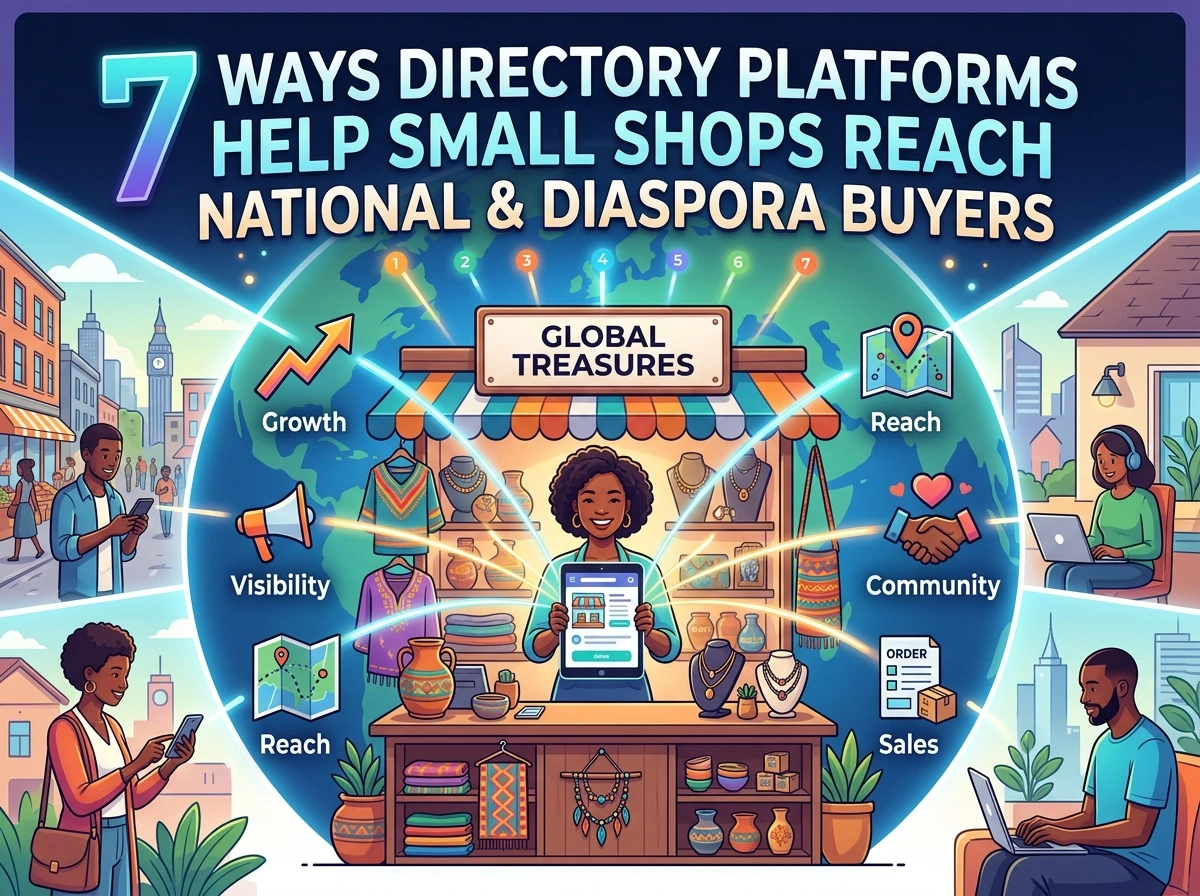
A tailor in Umuahia with no website just received an order from a Nigerian in Texas. This highlights the growing opportunities for new businesses and services in Umuahia to reach a wider audience. The buyer found the shop through a directory listing, checked the reviews, and sent payment via WhatsApp. This happens more often than most shop owners realize.
Directory platforms connect small shops with buyers who cannot visit in person, whether they live in Lagos, London, or Houston. This guide covers seven specific ways these platforms help you reach national and diaspora customers, plus the steps to list and optimize your shop for remote buyers.
What directory platforms do for small shops
Directory platforms give small shops a digital storefront that buyers can find through search engines, maps, and AI tools. When a buyer in Lagos searches for "tailor in Aba" or a Nigerian in London looks for "ankara fabric Umuahia," directory listings with verified contact details, reviews, and direct communication buttons appear in the results. The shop owner gets discovered without building a website or running ads.
Think of a directory as a phone book that also shows photos, prices, customer reviews, and a WhatsApp button. This concept extends to various sectors, including property listing sites. Unlike marketplaces such as Jumia or Jiji, directories focus on connecting buyers with the business itself rather than hosting the transaction. You list your shop, buyers find you, and then you handle the sale directly.
A few terms come up often when discussing directories:
-
Directory platform: a website or app that lists businesses by location, category, and verified contact details so buyers can reach them directly
-
NAP consistency: ensuring your Name, Address, and Phone number match exactly across every listing
-
Verified badge: a trust signal showing the business owner confirmed their identity and physical location
Why national and diaspora buyers search directories before marketplaces
Here's the problem a buyer in a different city or country faces: they cannot walk into your shop, touch the fabric, or meet you in person. This challenge is particularly relevant for businesses in Eastern Nigeria looking at selling directly to diaspora buyers. Before sending ₦100,000 or more to someone they've never met, they want proof that your business actually exists.
Marketplaces show products, but the seller often remains anonymous. A directory listing shows the actual business: the address, the phone number, photos of the physical shop, and reviews from people who have visited. For a diaspora buyer in Houston trying to send a gift to family in Umuahia, that verification matters more than a product photo.
National buyers outside your city have similar concerns. Someone in Abuja ordering custom clothing from Aba wants to see that other Lagos and Abuja customers received their orders. Directory reviews from verified local customers provide that confidence.
-
Diaspora buyers look for WhatsApp numbers and verified addresses before paying across borders
-
National buyers outside the shop's city want reviews from real locals, not anonymous marketplace ratings
-
Both groups respond better to listings with photos, naira prices (plus USD equivalents), and direct chat buttons
7 ways directory platforms help small shops reach national and diaspora buyers
1. Placing your shop in the Google Local 3-Pack and map results
When someone searches "fashion shop Aba" on Google, a map appears at the top of the results with three business listings underneath. This is the Local 3-Pack, and it captures most clicks for local searches.
Directory platforms help your shop appear here by feeding Google consistent, verified business information. When your NAP data matches across multiple directories (Google Business Profile, VConnect, Finelib, Localeadr), Google treats your shop as a legitimate business worth showing to searchers. To maximize visibility, it's crucial to optimize your GMB profile effectively. A diaspora buyer searching "tailor in Umuahia" sees the 3-Pack first, often before any website results.
2. Syndicating your NAP across high-authority directories
NAP syndication means distributing your Name, Address, and Phone number identically across many directories. When VConnect, Finelib, Google Business Profile, and Localeadr all show the same information for your shop, search engines gain confidence that your business is real and established.
Inconsistent NAP creates problems. If one directory shows your old phone number while another has a misspelled street name, buyers get confused and search engines rank you lower. A shop listed as "Mama Nkechi Fabrics" on Google but "Nkechi's Fabric House" on VConnect looks like two different businesses to both buyers and algorithms.
3. Turning verified badges into diaspora trust signals
A verified badge tells buyers that the shop owner confirmed their identity and physical location. For a diaspora buyer sending ₦150,000 to Nigeria for custom clothing, this badge reduces the fear of scams that keeps many people from buying remotely.
Verification can involve ID checks, address confirmation, or in-person audits by local reviewers. Localeadr's "Verified Plugs" program, for example, sends local residents to confirm that a business actually exists at its listed address before awarding the badge. The badge then appears on the listing, signaling to buyers that someone has physically checked this shop.
4. Converting listings into WhatsApp chats and quote requests
Nigerian commerce runs on WhatsApp. A directory listing with a direct WhatsApp button lets buyers message the shop instantly instead of filling out contact forms or waiting for email replies that may never come.
Quote request buttons serve a similar purpose for custom orders. A buyer can describe what they want (tailoring measurements, bulk fabric quantities, specific product variations) and receive pricing without making a phone call. This convenience matters especially for diaspora buyers in different time zones who cannot call during Nigerian business hours.
5. Feeding AI search platforms like ChatGPT, Gemini, and Perplexity
AI search tools pull business recommendations from structured directory data, not just Google. When a diaspora buyer asks ChatGPT "where can I order ankara fabric in Aba?" the AI looks for businesses with clean, consistent information across directories.
Shops with proper NAP data and JSON-LD schema (a code format that labels business information for machines) can appear in AI-generated answers. JSON-LD tells the AI: "This is a business name. This is the address. This is the phone number. These are the products." Without that structure, your shop is invisible to AI search.
6. Collecting verified reviews that close the distance gap
Reviews from real local customers give diaspora and national buyers confidence they cannot get from product photos alone. Building this trust is a core component of effective online reputation management. A review saying "I ordered from Lagos and received my package in three days, exactly as described" carries weight for someone considering the same purchase.
Verified reviews tied to real purchases or confirmed reviewer identity matter more than anonymous ratings. Some platforms reward reviewers with airtime or other incentives to encourage honest feedback. Localeadr's City Experience program turns local residents into "Verified Plugs" who share honest reviews in exchange for weekly rewards, helping shops gather feedback faster.
7. Capturing leads and analytics without a full website
Many small shops lack websites, but they still benefit from knowing who views their listing, requests quotes, or clicks their WhatsApp button. These insights are vital for developing effective local SEO strategies to drive leads. Directory platforms with built-in analytics reveal which products attract attention and where buyers are searching from.
A tailor in Umuahia might discover that 40% of listing views come from Lagos and the UK. That data suggests adding shipping information and USD pricing. Without analytics, the same tailor would never know that diaspora buyers were looking but leaving because shipping details were missing.
How to list and optimize your small shop on a directory platform
Step 1. Claim or create a verified business profile
Search for your shop on major directories first. Someone may have already created a listing with outdated information. Claiming that existing listing prevents duplicate profiles from confusing buyers and search engines.
If no listing exists, create one with your current business name, address, and phone number. Use the exact same spelling and format you plan to use everywhere else.
Step 2. Fix your NAP across Google, Facebook, and local directories
Audit your current listings on Google Business Profile, Facebook, VConnect, Finelib, and any other directories where your shop appears. Correct any mismatches.
-
Business name: spelled identically everywhere (no abbreviations on one site, full name on another)
-
Phone number: the WhatsApp-enabled line buyers will actually use
-
Address: includes landmarks or descriptions diaspora buyers can share with delivery riders
Step 3. Add product photos, naira prices, and USD equivalents
Diaspora buyers want to see current stock and pricing before committing. Upload clear photos of your top-selling items with prices in naira and approximate USD equivalents.
Stale or missing photos signal an inactive shop. Update your listing whenever you add new products or change prices.
Step 4. Turn on WhatsApp, chat, and quote request buttons
Enable direct communication features in your directory profile. Hiding contact information behind forms loses impatient buyers, especially those in different time zones who cannot wait for email responses.
Your WhatsApp link opens directly to a chat with your shop, not a generic business page.
Step 5. Ask verified reviewers to share honest feedback
Request reviews from recent customers, especially those who received delivery outside your city. Their experiences matter most to the national and diaspora buyers you want to reach.
Red flags and mistakes to avoid when listing your shop
-
Duplicate listings: multiple profiles for the same shop with different phone numbers confuse search engines and buyers
-
Outdated stock photos: diaspora buyers who order based on old photos and receive different products leave negative reviews
-
Unmonitored reviews: ignoring complaints or fake reviews damages trust; respond to every review, positive or negative
-
Missing category tags: a shop listed only as "retail" instead of "fashion" or "ankara fabric" will not appear in specific searches
-
No price transparency: diaspora buyers distrust shops that hide prices and only reveal them in private chats
Getting your shop in front of diaspora buyers with Localeadr
Localeadr addresses the specific challenges small shops face when trying to reach buyers outside their city. The platform offers verified business profiles with audited NAP and location confirmation, direct buyer communication through WhatsApp and quote requests, and analytics showing where your buyers are searching from.
The Verified Plugs program rewards local reviewers with airtime for honest feedback, helping shops build the trust signals diaspora buyers look for before sending money.
Register on Realinkr to claim your shop listing and start reaching national and diaspora buyers.
Frequently asked questions about directory platforms for small shops
Which business directory is best for a Nigerian small shop?
The best directory depends on your category and target buyers. Google Business Profile is essential for local search visibility. Nigerian directories like VConnect, Finelib, and Localeadr help reach buyers searching specifically for local vendors. Listing on multiple directories with consistent NAP data produces better results than relying on one platform alone.
Are online directory listings profitable for shop owners?
Directory listings can generate leads at lower cost than paid ads because directory users already intend to purchase. Profitability depends on converting those leads through quick responses and competitive pricing. A shop that replies to WhatsApp messages within minutes will close more sales than one that takes hours.
How do diaspora buyers use business directories to find Nigerian shops?
Diaspora buyers search directories by category and city, for example "tailor in Aba" or "fashion shop Umuahia." They look for verified shops with reviews, WhatsApp contact, and clear pricing before sending money home for purchases or gifts. Reviews from other diaspora buyers who successfully received orders carry particular weight.
Can a small shop appear in AI search results without a website?
Yes. AI platforms like ChatGPT and Perplexity pull recommendations from directory listings with structured data. A shop with verified NAP and reviews on directories can appear in AI answers without owning a website. The key is consistency: your business information matches across every platform where you appear.